
Digital Safety: Teaching “Private vs. Public” to the Preschool Generation
To teach “private vs. public” online to preschoolers, use the “front porch” analogy: explain that the internet is like a global front porch where anything shared can be seen by everyone forever.
Define private data like names, home addresses, and school locations as family-only safety secrets. These early boundaries build executive function for responsible digital citizenship.

In 18 years of digital marketing, I’ve seen the internet’s back end—data harvesting, tracking, and posts surviving long after “delete.” Professionally, it’s data integrity. As a mother, it’s terrifying.
When my toddler tried to swipe a physical photo like a tablet screen, it was cute—but a wake-up call. If his brain already expects digital rules, teaching ethics can’t wait until 13. In 2026, that’s too late. We start at age three because internet’s influence on kids begins early in the digital world.
Because by the time they’re teens, their digital footprints are already permanent. Reputation management begins in the sandbox, not the job interview. Swipe isn’t instinct—it’s learned. And so must caution be.
1. The “Front Porch” Analogy: Physical vs. Digital Space
The biggest hurdle in teaching digital safety to a 3 or 4-year-old is that they cannot see the “audience.” When they speak to a smart speaker or look at a camera, they see a toy, not a gateway to four billion people in the digital world.
The Strategy: Use the “Front Porch” rule. I explain to my son that our house is “private.” What we do inside—the way we dance in our pajamas or the silly faces we make—is just for us.
But the “Internet” is like our front porch. If we put a picture on the front porch, anyone walking down the street, anyone in the city, and anyone in the world can see it.
The Lesson: If you wouldn’t stand on the front porch and shout your middle name or show everyone your favorite toy, we don’t put it on the “Digital Porch” either. This creates a concrete physical boundary for an abstract digital concept and improves online safety for children.
2. Introducing “Digital Consent.”
In the professional world, we deal with GDPR and privacy compliance daily. In parenting, this translates to consent. Before I post a photo of my son to my private social media, I have started asking him, “I really love this picture of you at the park.
Is it okay if I share it with our family online? “Why this matters:
1. It teaches him that he owns his image.
2. It models the behavior I want him to have. If I don’t respect his privacy, why would he respect mine (or his friends’) when he gets his own device?
3. It builds executive function. It forces him to pause and think about the “public” nature of the photo before the “post” button is hit.
These habits are essential for online safety for children and reduce the future impact of electronic media on children.
3. Defining “Safety Secrets” (Private Data)
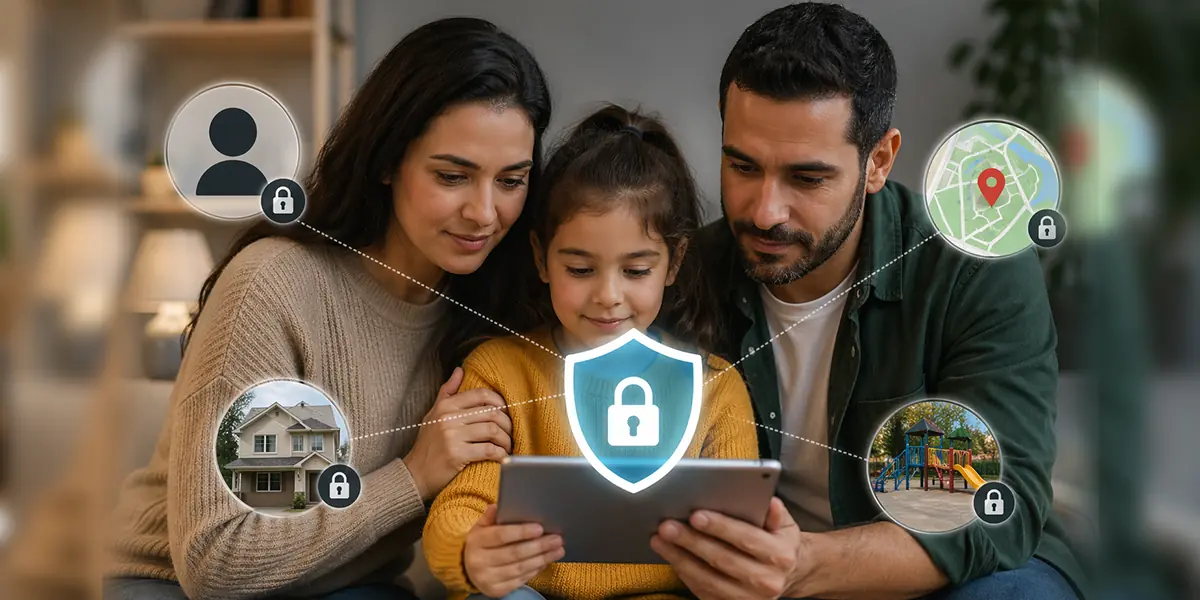
Preschoolers are great at keeping “surprises” (like a birthday gift), but they struggle with “secrets.” We need to categorize digital data as Safety Secrets.
Safety Secrets are pieces of information that only “The Home Team” (Mom, Dad, and the child) should know. This includes:
- The Full Name: We only use nicknames or first names online.
- The Map: We never show our house number or the name of our school in a video.
- The Location: We don’t “check in” to the park until after we have left.
The Professional Insight: In marketing, “location data” is a primary tracking metric. By teaching children to delay or withhold location, you are teaching them to defeat the basic mechanisms of digital tracking before they even know what a “cookie” is. This strengthens safety and security in digital space.
4. The “Permanent Marker” Rule
Toddlers understand that a pencil can be erased, but a permanent marker stays.
I tell my son that the internet is written in Permanent Marker. Even if we delete a photo, someone else might have already “traced it” (screenshotted it). This isn’t meant to scare them but to instill a sense of digital weight.
When we treat digital actions as permanent, we encourage the brain’s “air traffic control” (the prefrontal cortex) to take over. We move from Impulse (I want to see this video now!) to Intention (Is this a safe place to be?). This reduces the long-term impact of electronic media on children.
5. Bridging the Gap: Modeling the “Why.”
As an agency owner, my phone is an extension of my arm. My son sees me “working” on it constantly. If I tell him the internet is a “public porch” but I spend all day staring at it, the message is lost.
The Fix: We have “Device-Free Zones.” When we are eating or playing, the “Digital Porch” is closed.
This shows the child that while the digital world is vast and interesting, the physical private world is where the most important connections happen. It reinforces that “private” is high-value and “public” is secondary. This balance helps manage internet influence on kids.
Conclusion: Building the Foundation
Teaching digital safety isn’t about a single “big talk.” It’s about the small, daily mentions of boundaries, consent, and the difference between what stays inside our walls and what goes outside.
By the time our children are old enough to navigate the complex algorithms of the 2030s, they won’t just be “users”—they will be digital architects who understand the value of their own privacy and online safety for children.
“Users”—they will be digital architects who understand the value of their own privacy.
The Handshake: Establishing these boundaries is much easier when your child’s brain is fueled and regulated.
If they are hungry, tired, or “heat-stressed” from the April sun, their impulse control vanishes. To ensure they have the mental energy for these big lessons, make sure their physical needs are met first.
👉 For practical support, explore: [Digital Safety & Online Privacy].