
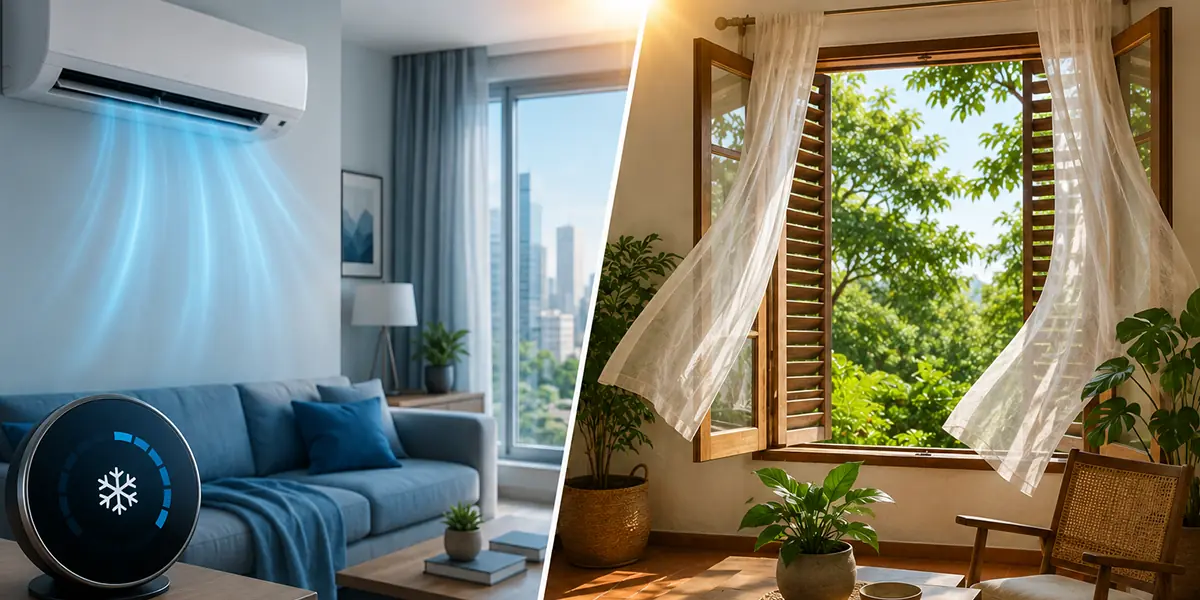
Heat-Wave Survival: Modern AC Settings vs. Traditional Cross-Ventilation
In a North Indian May, we often default to “Maximum AC” (18°C) the moment we step inside. But as any technical strategist will tell you, finding the best temperature for AC units is critical, as a low blast is an inefficient “System Load.” True heat-wave survival in 2026 is about managing Airflow and Thermal Mass to maintain overall indoor thermal comfort.

The Bureau of Energy Efficiency (BEE) and global HVAC experts recommend 24°C to 25°C as the optimal setting for Indian homes.
- The Science: Setting your AC to 18°C doesn’t cool the room faster; it just makes the compressor work longer, driving up bills and reducing the unit’s lifespan. Researching the best temperature for AC efficiency shows that 24°C is the “Human Comfort Equilibrium.”
- The Dehumidifier Hack: On those “sticky” humid May afternoons, use “Dry Mode” (the water drop icon). Removing humidity makes 25°C feel like 22°C without the heavy energy draw, letting you cool room without overcooling your living space.
2. The Lost Art of Cross-Ventilation
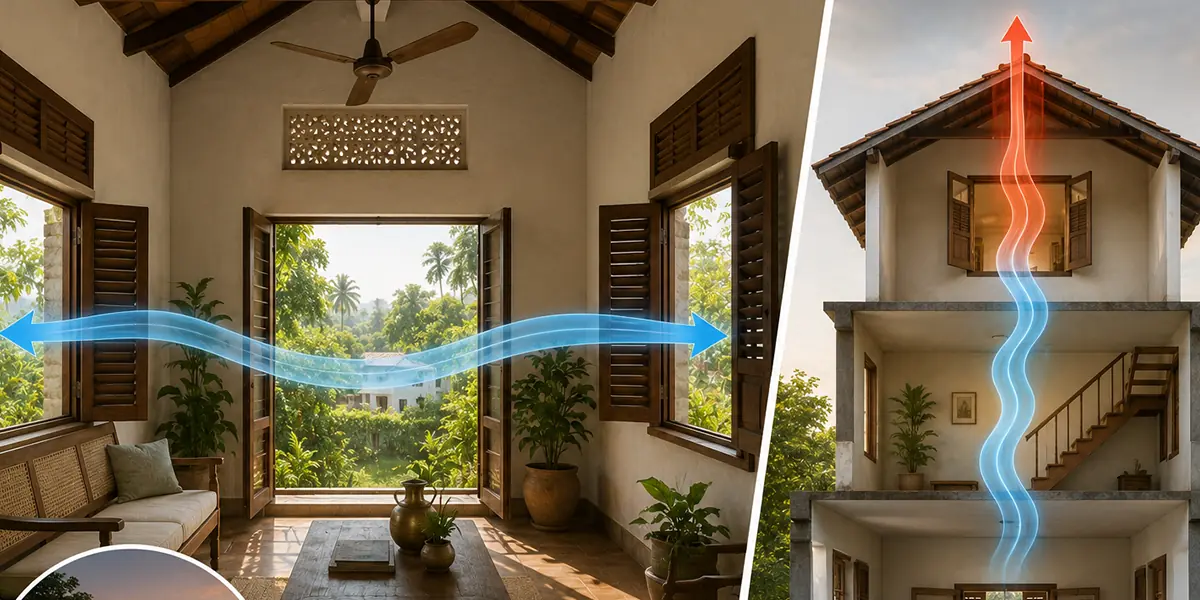
Traditional Indian architecture used passive cooling long before electricity. Applying smart ventilation for home tips can drastically cut your electricity reliance.
- The “Tunnel” Effect: Open windows on opposite sides of the house, but only when the outside air is cooler (early morning, 4 AM – 7 AM). This flushes out the “Stale Heat” trapped in your walls.
- The Stack Effect: If you have a multi-story home, open a top-floor window. As hot air rises, it will exit through the top, pulling cooler air in from the ground floor.
3. The “Wet Screen” Technique
A traditional hack for modern balconies rooted in passive cooling architecture:
- The Move: Hang a heavy, wet linen curtain or a “Khas” mat over a window that gets direct wind. As the hot air passes through the moisture, it undergoes Evaporative Cooling, dropping the temperature by 3–5°C before it even hits your AC.
4. Strategic Shading: The First Line of Defense
Stop the sun before it enters by using proven passive cooling architecture principles.
- External Fix: Use bamboo “Chicks” or external awnings.
- Internal Fix: Blackout curtains are good, but heat-reflective “Honeycomb” blinds are better, as they trap a layer of air as an insulator.
The Ambient Space Shift
Transforms Any Setting Instantly: Stepping away from external distractions turns your immediate surroundings—whether a quiet, shaded room or a transitional journey—into a calm, focused sanctuary.
Drives Screen-Free Engagement: Keeping the atmosphere peaceful is only half the battle; utilizing our [Analogue Bag Hack] strategy easily turns any stationary moment into an active, creative zone while the world rushes by.
5. Maintenance: The “Efficiency Audit”
- Clean the Filters: A dusty filter can reduce AC efficiency by 15%. Wash them every 15 days in May/June to sustain your indoor thermal comfort.
- The Fan Synergy: Use a ceiling fan with the AC. The “wind chill” effect allows you to set the AC 2 degrees higher while feeling just as cool.
Picture Suggestions:
The AC Panel: A close-up of a modern AC remote set to 24°C with the “Eco” or “Dry” mode highlighted.
The Airflow Diagram: A graphic showcasing actionable ventilation for home tips by showing air entering one window and exiting through another, creating a “cool breeze” path.
The Traditional Touch: A photo of a wet “Khas” mat or a heavy linen curtain blowing in a doorway.
Thermal Contrast: A child napping comfortably under a light cotton sheet in a room that looks “dim and cool” rather than “dark and freezing.”