Best Air Purifiers for Indian Nurseries: A 2026 Update
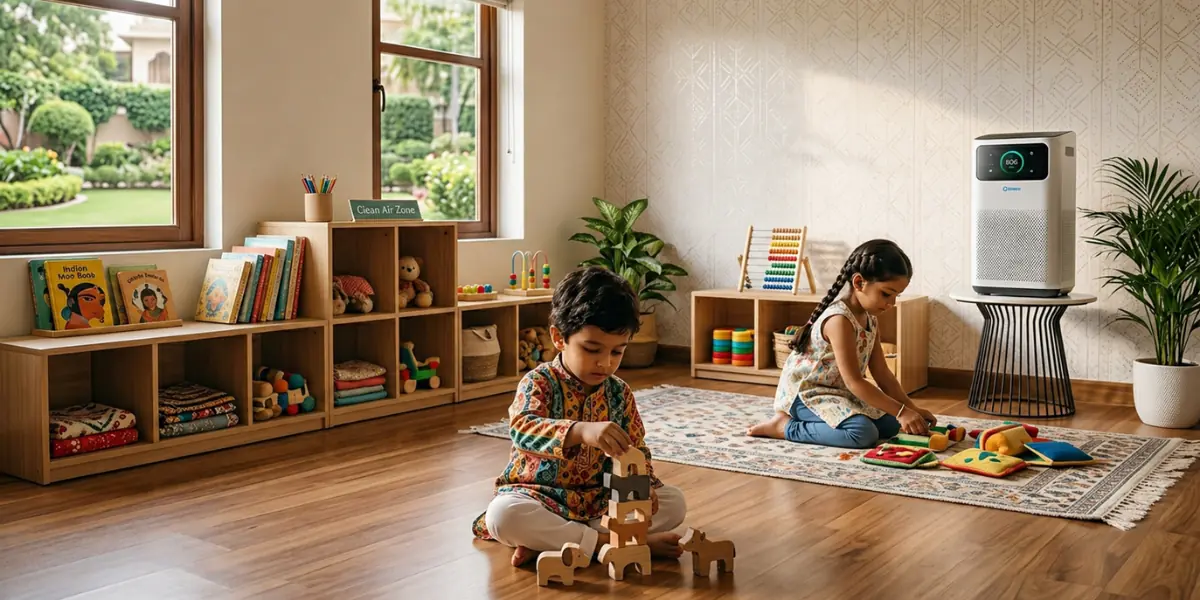
The best air purifiers for Indian nurseries must feature a True HEPA H13 filter to capture PM2.5 particles and an activated carbon air purifier system to neutralize household VOCs and odors. For 2026, top-rated models include the Dyson Purifier Cool for its bladeless safety and formaldehyde sensing, the Philips 3000i Series for its rapid Clean Air Delivery Rate (CADR) in larger rooms, and the Coway Professional Airmega for its long-lasting green HEPA technology. Ensure the device has a “Sleep Mode” with noise levels below 30dB to maintain a conducive sleep environment for infants.
The Invisible Priority: Why We Audit Our Air
In the digital world, we talk about “Clean Data”—removing the noise so the system can function at its peak. In our homes, especially in the dust and smog-prone regions of India, “Clean Air” is the most critical infrastructure we can provide for our children.
As parents, we spend hours researching the best strollers, the safest car seats, and the most organic foods. But the one thing our children consume more than anything else is the air in their nursery.
With urban pollution levels frequently hitting unhealthy levels across Indian metros, an air purifier for newborn rooms is no longer a luxury; it is a health security essential. Many families now consider an air purifier for infants as important as safe bedding.
Here is my 2026 field-tested guide to the units that actually stand up to Indian conditions
1. The “Nursery-Standard” Checklist
Before looking at brands, you need to understand the “Technical Specs” that matter for a child’s room. Not all purifiers are created equal, and some can actually be counterproductive.
- HEPA H13 Grade: This is the gold standard. It captures 99.97% of particles as small as 0.3 microns. In India, where PM2.5 (fine particulate matter) is the primary enemy, anything less than H13 is insufficient.
- No Ozone Generation: Avoid “Ionizers” or “Ozone Generators.” These can produce ozone as a byproduct, which can irritate a child’s developing lungs. Stick to mechanical filtration (HEPA + Carbon).
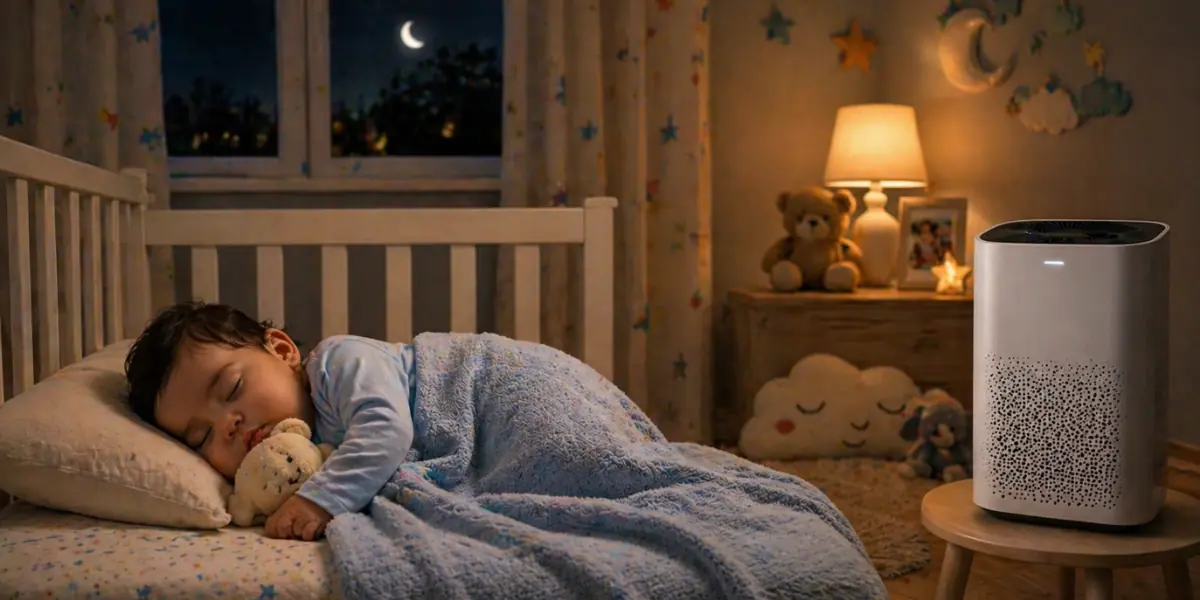
- Noise Levels (The “Sleep” Factor): Babies need quiet. Look for a unit with a dedicated sleep mode below 30 dB, especially when selecting an air purifier for newborn rooms.
2. Top Picks for 2026: The “Parent-Approved” Shortlist
A. The Gold Standard: Dyson Purifier Cool (Formaldehyde Edition)
- The “Yes” Factor: It’s bladeless, which makes it 100% safe for a “Yes Space” where a toddler might be wandering.
- The Performance: It specifically targets Formaldehyde, a common gas released by new nursery furniture, paints, and carpets. It’s a “Set and Forget” device that adjusts automatically as air quality dips.
B. The Workhorse: Coway Professional Airmega 150
- The “Yes” Factor: Simple, sleek, and incredibly effective.
- The Performance: Its “Green HEPA” filter is designed to be particularly effective against viruses and bacteria. It has one of the easiest filter-changing mechanisms on the market, which is a blessing for busy parents.
C. The Value Play: Xiaomi Smart Air Purifier 4 Series
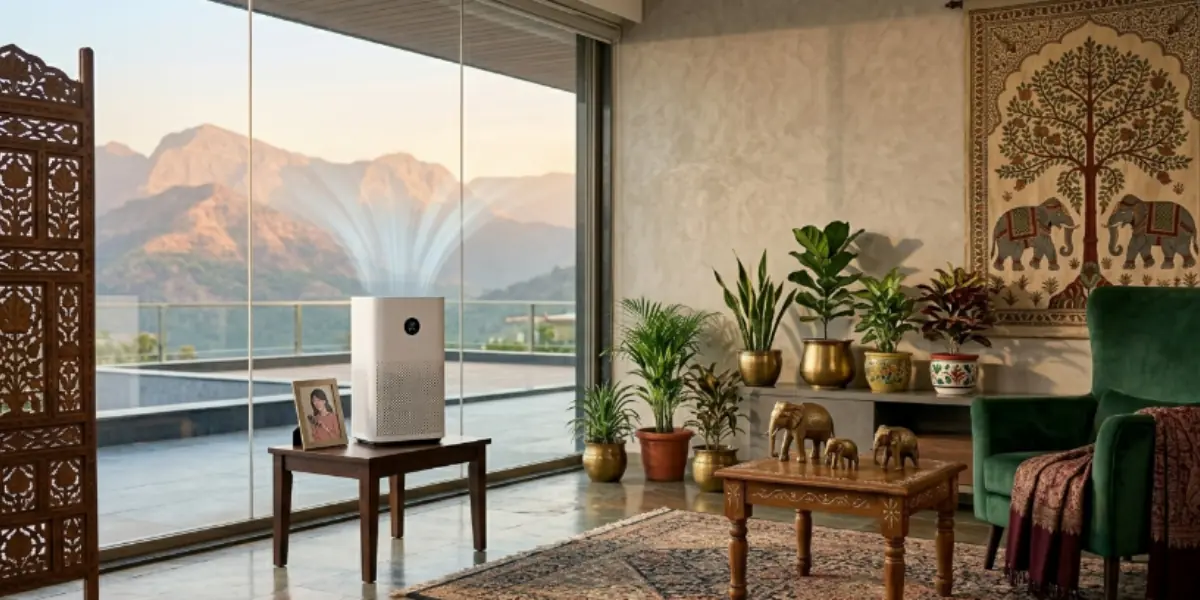
- The “Yes” Factor: High-end tech at a more accessible price point.
- The Performance: Strong CADR for its size. The Mi Home app allows parents to monitor nursery air quality remotely. For many homes, the Xiaomi smart air purifier remains a practical choice.
3. The “Indian Reality”: Managing the Filter Life
One thing global manuals don’t tell you is that Indian dust is heavy. If a manual says a filter lasts 12 months, in a city like Delhi or Mumbai, it likely lasts 6 to 8 months.
- The Pre-Filter Hack: Most units have a washable pre-filter. I make it a habit to vacuum this every two weeks. This prevents the “heavy dust” from clogging the expensive HEPA filter, extending its life and saving you money in the long run.
- Placement Matters: Don’t tuck the purifier in a corner or behind curtains. Keep airflow open. This is especially important for an air purifier with activated carbon filter because airflow impacts odor removal performance.
4. Why Air Quality is a “Behavioral Tool.”
You might be surprised to learn that air quality and behavior are linked. Studies have shown that high CO2 levels and particulate matter can lead to irritability, poor sleep, and reduced “Executive Function” in children.
When a child sleeps in clean, well-regulated air, they wake up more “Regulated.” They have more patience, fewer “unexplained” tantrums, and a higher capacity for learning. This is why many parents choose an air purifier for infants even before symptoms appear.
5. The “Fresh Air” Dilemma
We can’t keep our windows shut 24/7.
- The Strategy: I check the AQI (Air Quality Index) every morning. If it’s below 100, we open the windows for 20 minutes to flush out CO2. Then, we seal the room and let the purifier do its “Deep Clean.”
- This balance ensures the air isn’t just “clean” but also “fresh.” It also helps any activated carbon air purifier work more efficiently after outside ventilation.
Conclusion: Investing in the Future
An air purifier isn’t just a gadget; it’s a commitment to your child’s long-term respiratory health. In an environment where we can’t always control the “Public” air outside, we must take full control of the “Private” air inside our homes.
Whether you choose a premium model or the Xiaomi smart air purifier, the goal is the same: cleaner breathing for growing children.
Ensuring your child breathes well is the first step in ensuring they play well. Once the air is clear and their lungs are healthy, they have the energy for high-intensity movement—even on the hottest days.
To see how to channel that energy, check out my recent guide on [Indoor Physical Play: High-Energy Solutions for High-Heat Days].