Indoor Physical Play: High-Energy Solutions for High-Heat Days
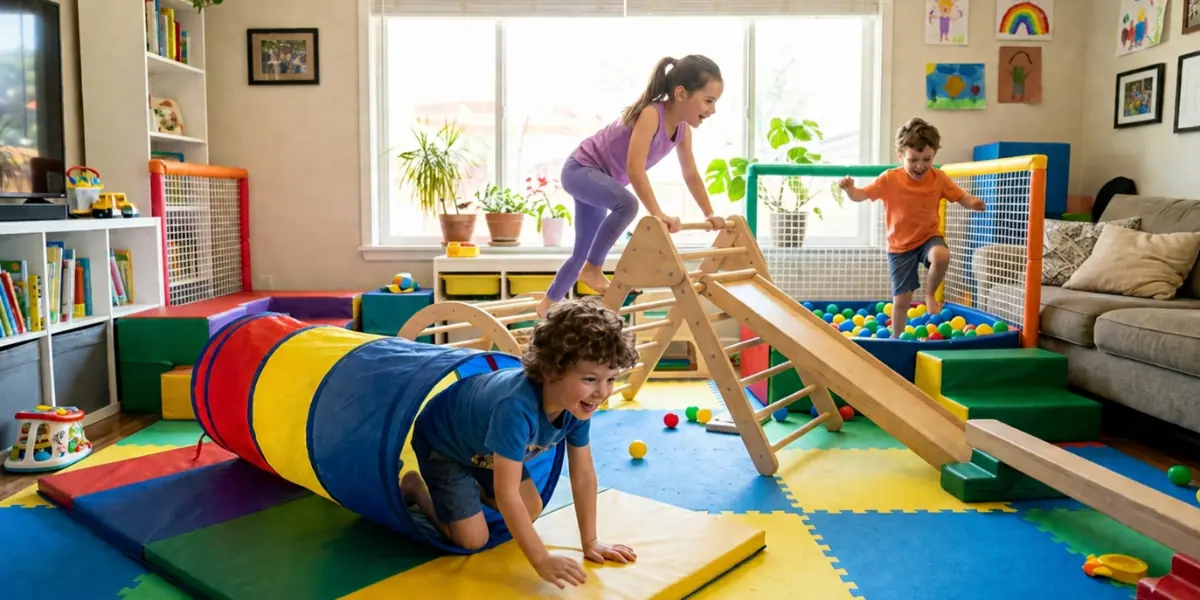
To facilitate indoor physical play, focus on activities that stimulate the proprioceptive and vestibular systems. Solutions include “Heavy Work” tasks (like pushing laundry baskets), indoor obstacle courses using couch cushions, “Animal Walks” (crab walks and bear crawls), and “Vertical Play” (using masking tape on walls for jumping goals). These physical games for kids regulate a child’s sensory system, improve executive function, and prevent the “cabin fever” restlessness associated with long periods of indoor confinement.
The “Indoor Energy Paradox”
In the professional world, we talk about “efficiency” and “bandwidth.” When a server is overloaded and the cooling system can’t keep up, it crashes.
Children are remarkably similar. In April, when the North Indian sun or sudden pre-monsoon showers trap us indoors, their “bandwidth” for energy becomes overloaded, but their “cooling system” (physical movement) is restricted.
As an IT professional, I see this as a resource management problem. If my son can’t burn off his physical energy, his mental “processing power” (behavior and focus) suffers.
We can’t wait for the weather to change; we have to optimize the “user interface” of our living room with Indoor physical activities for kids that allow for high-intensity movement without breaking the house.
1. The Science of “Heavy Work” (Proprioceptive Input)
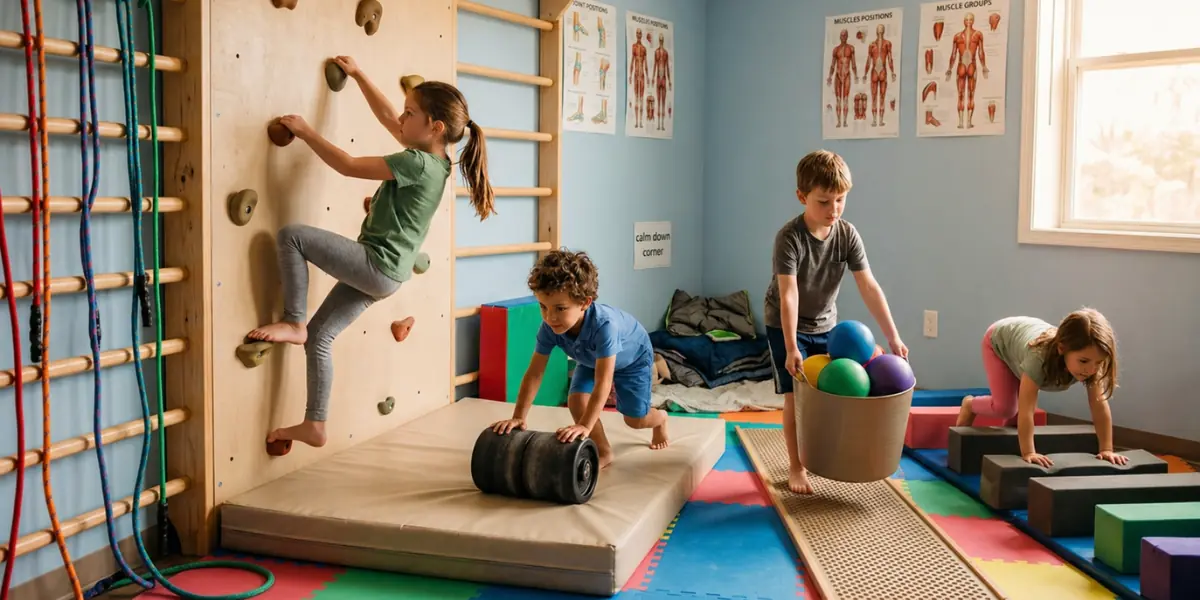
When children are “climbing the walls,” their bodies are actually craving proprioceptive input—sensory information that comes from the joints and muscles. This is the fastest way to regulate a restless child.
- The Laundry Basket Push: Fill a basket with books or cushions and have them “deliver” it across the house. This physical games for kids option provides the resistance their muscles are screaming for.
- The “Human Sandwich”: Pressing them gently between two sofa cushions (the “bread”) provides deep pressure that calms the nervous system instantly.
Why this works: It’s the physical equivalent of a “system reset.” It moves the child from a frantic, high-arousal state to a grounded, focused state.
2. Obstacle Courses: The “UX” of Movement
A flat floor is boring. To get a child moving, you need to introduce “friction” and “challenges.”
- Level 1: The Floor is Lava. Use cushions as safe islands. This encourages jumping and balance (vestibular input).
- Level 2: The Masking Tape Maze. Use painter’s tape on the floor to create “balance beams” or zigzag paths. It costs nothing but creates an Indoor obstacle course for kids with clear visual boundaries.
- Level 3: The Under-Table Tunnel. Drape a sheet over the dining table. Crawling is one of the best full-body exercises for developing core strength and bilateral coordination.
3. Animal Walks: Strength Training in Disguise
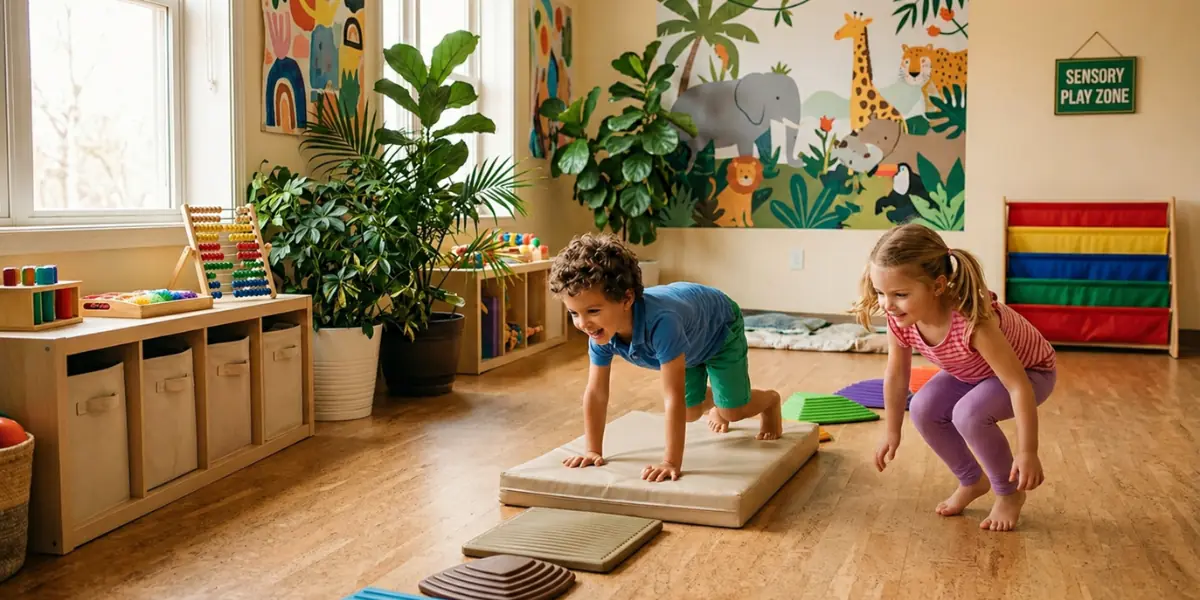
You don’t need a gym; you just need an imagination. Animal walks are a staple in pediatric occupational therapy because they build the core strength needed for sitting still in a classroom later.
- The Bear crawl exercises: Hands and feet on the floor, hips high. Great for shoulder stability.
- The Crab Walk: Belly up, walking on hands and feet. This is excellent for “Heavy Work” and core engagement.
- The Frog Jump: Deep squats and explosive jumps. This burns through “high-heat” restlessness faster than any other move.
Daily Animal walks for kids also improve balance, posture, and coordination.
4. Vertical Play: Using the Walls
We often think of play as something that happens on the floor, but vertical play is a secret weapon for upper body strength and hand-eye coordination.
- Masking Tape High Jump: Place strips of tape at different heights on the wall. Challenge them to see which one they can tap with their hand.
- The “Sticky Note” Hunt: Hide sticky notes high and low around a single room. The reaching, stretching, and squatting involved are stealthy Indoor physical activities for kids that feel fun instead of structured exercise.
5. The “Screen-Free” Movement Hour
On days when the heat index is hitting 40°C+, the temptation is to hand over the tablet. But we know that “Digital Sedation” often leads to a bigger meltdown later because the energy is still trapped in their bodies.
The Strategy: Set a “Movement Hour” before any screen time. If they want to watch 20 minutes of a show, they first complete a circuit of Bear crawl exercises or basket pushes. Add physical games for kids, like jumping races or wall taps, for variety.
This teaches them that we prioritize our physical “battery health” before we consume digital content.
Conclusion: Designing for Success
Indoor play doesn’t have to be chaotic. When we provide structured ways for our children to move, we aren’t just keeping them busy—we are designing an environment that supports their biological needs through Indoor sports for kids and movement routines.
Once the energy is burned off, their minds are much more open to the “quiet” lessons, like understanding the importance of boundaries or learning about safety.
To see how these physical boundaries translate into emotional ones, check out our guide on [The Emotional Intelligence of “No”: Setting Boundaries].